William Stanley
1561–1642 · 6th Earl of Derby; Oxford-educated; documented playwright
A documented dramatist with aristocratic access and a continental education. The Derbyite case was first advanced systematically by Abel Lefranc in 1919. Stanley's convergence profile is thin outside the Price and court frameworks.
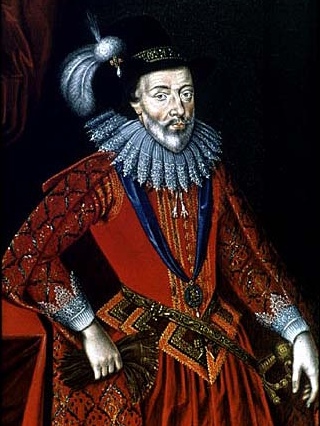
What the Primary Sources Show
William Stanley was the 6th Earl of Derby, succeeding to the title in 1593. He was educated at Oxford and travelled extensively on the Continent before inheriting. A 1599 intelligence report by George Fenner notes that the Earl of Derby "is busyed only in penning comedies for the common players", a primary source document placing him in the act of writing plays for performance. He was the son-in-law of Edward de Vere, having married de Vere's daughter Elizabeth in 1594.
Stanley's continental travels included France and Spain; the extent of any Italian journey is not documented in primary sources. He patronised playing companies, including a troupe known as Derby's Men. His long life (he survived until 1642) means the temporal problem that affects de Vere does not arise for Stanley; he was alive when all the plays in the canon were written and performed.
The case for Stanley was developed by Abel Lefranc (Sous le masque de William Shakespeare, 1919), who identified Stanley's French travels with the settings of Love's Labour's Lost and other plays. The primary source base for Lefranc's identifications is thinner than Roe's field-verified Italian research.
Documented writing comedies for common players (1599 Jesuit report). Passes the author profile adequately. The qualifying scholarly publication has not yet made the full primary source case.
Framework Scores
Scores reflect primary source evidence only. Correspondence, inference, and parallel arguments are not counted, a check mark requires a document.
Open Questions
The Italian question
Stanley's continental travels are documented, but not specifically to Italy. The topographical accuracy of the Italian plays (Roe 2011) is a strong constraint on any candidate. Primary source documentation of Stanley's Italian knowledge (travel, language, library) would substantially strengthen his case.
The Fenner report
The 1599 Fenner document is a primary source placing Stanley in the act of writing plays. Its full context, who commissioned the report, why Stanley was being surveilled, and what "comedies for the common players" specifically means, has not been fully explored in primary sources.
The de Vere connection
Stanley married Edward de Vere's daughter in 1594. Some scholars argue this created a context for literary collaboration or transmission. This is inference without primary source support; it is noted here as a research question, not evidence.