Mary Sidney Herbert
1561–1621 · Countess of Pembroke; poet, translator, literary patron
The strongest paper trail score of all ten candidates. A documented poet and translator of exceptional range, she presided over the most significant literary circle of the Elizabethan period. The convergence profile is narrower than her paper trail score suggests.
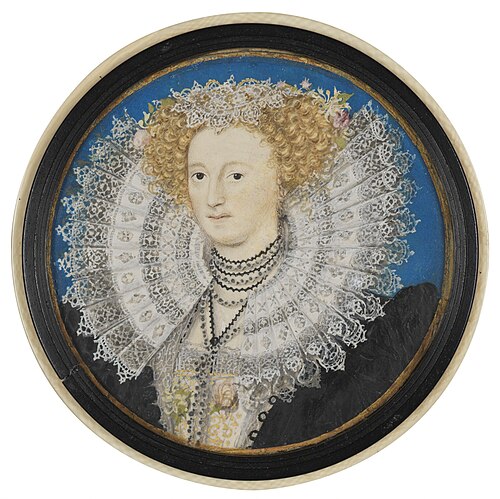
What the Primary Sources Show
Mary Sidney Herbert was the sister of Philip Sidney and Countess of Pembroke. She completed and published her brother's Arcadia after his death, translated the Psalms into English verse, Philip Sidney had completed just 43 of the 150 before his death; Mary completed the remaining 107 in her own literary voice, revising his early drafts and then writing the rest entirely her own (Hannay, Philip's Phoenix, p. 89), translated Robert Garnier's Antonius (directly relevant to Shakespeare's Antony plays), and translated Petrarch's Triumph of Death. She was a documented lyric poet in her own right, with surviving verse including an elegy for Philip Sidney.
Wilton House, her seat, was one of the most significant literary gathering places of the period. Edmund Spenser, Samuel Daniel, Michael Drayton, and Ben Jonson all had connections to her circle. The First Folio was dedicated to her sons, William and Philip Herbert, a documented connection between the Shakespeare canon and the Herbert family. She had documented access to French, Latin, and Italian literary sources.
Her documented connection to Christopher Marlowe is specific. A dedicatory poem in Thomas Watson's Amintae Gaudia (London: William Ponsonby, 1593) by C. M. (universally identified as Christopher Marlowe) addresses her as ‘Sydnae vatis Apollinei genuina soror . . . Poetarum nostri temporis . . . Musae’: the true sister of the master poet Apollo, and muse of the poets of our time (Hannay, Philip's Phoenix, p. 82). In the same year, Marlowe's Edward 2 was entered in the Stationers' Register and published as performed by ‘the Earl of Pembroke his servants’, the company Mary is documented as personally directing. The will of actor Simon Jewel (proved 23 August 1592) specifies ‘my share of such money as shall be given by my lady Pembroke or by her means,’ a primary source confirming she took personal interest in running the Pembroke players. (A Sidney Chronology 1554–1654, eds. Brennan and Kinnamon, Palgrave Macmillan, 2003.)
Two contemporaries applied the same swan-and-Avon imagery to Mary Sidney that Ben Jonson would later use for the Shakespeare author in the First Folio. Samuel Daniel (her protégé, who credited her explicitly as the teacher who started his literary career) writes in Delia, Sonnet 48 (1592): ‘But Avon, rich in fame, though poor in waters, / Shall have my song, where Delia hath her seat. / Avon shall be my Thames, and she my song; / I'll sound her name the river all along.’ Every Sidneian scholar identifies ‘Delia’ as Mary Sidney. Michael Drayton, in his ‘Shepherd's Garland’ (1593), describes her as ‘Thames' fairest Swan, our summer's Nightingale.’ Jonson's ‘Sweet Swan of Avon’ in the First Folio prefatory poems (1623) is conventionally taken to refer to Shakspere; Daniel and Drayton were applying the same poetic vocabulary to Mary Sidney thirty years earlier.
Her paper trail score (the highest of all ten candidates) reflects a documented literary career in primary source terms. She was paid for literary work, documented as a patron, had manuscripts in her hand survive, wrote and received commendatory verses, and received a literary notice at death.
Robin Williams's Sweet Swan of Avon (2006) documents that every major Shakespeare source with a traceable connection points toward Mary's documented world. Samuel Daniel, her protégé, who credits her explicitly as the teacher who started his literary career, began the Civil Wars at Wilton. John Florio, whose Montaigne translation is a primary source for The Tempest, was in the Wilton circle; his published volume appears in the Sidney library catalogue. Mary, her brother Robert, and both her sons were founders and stockholders of the Virginia Company, under whose auspices the voyage took place; the Strachey letter describing the storm that underlies The Tempest is addressed to an unidentified 'Excellent Lady.' Her 1590 translation Discourse of Life and Death (from Duplessis-Mornay) has been proposed as a source for the Duke's 'be absolute for death' speech in Measure for Measure on the basis of documented verbal parallels.
Two further correspondences are specific enough to note. The Wogan (a cave directly under Pembroke Castle, which Mary administered) lies approximately six miles from Milford Haven by water. Cymbeline uses Milford Haven as its pivotal reunion point and features characters sheltering in a cave; no other candidate has a documented connection to that specific geography. Williams also documents over forty words appearing first in Mary's writings in the OED before their appearance in the Shakespeare canon, together with over 140 additional words used by Mary in a new sense before the plays do the same.
The Gender Question
Two of the ten candidates assessed here are women, Mary Sidney Herbert and Emilia Bassano Lanier. Writing under a male pen-name in Elizabethan England was not without precedent as a practice, but the specific argument requires primary source support. The name argument applies to both female candidates; the Bassano assessment addresses the additional class dimension it carries in her case. The strongest version of the case for Sidney is not that she alone wrote the works, but that Wilton House was the literary context from which the works emerged, a hypothesis that remains speculative without primary source grounding.
Most documented literary network of any candidate.
Framework Scores
Scores reflect primary source evidence only. Correspondence, inference, and parallel arguments are not counted, a check mark requires a document.
Open Questions
The 1593 gap
The name "Shakespeare" appears in print in 1593. No known event in Mary Sidney Herbert's biography accounts for this specifically. This is the most significant structural gap in any case for her sole authorship.
Italian knowledge
Her documented languages include French and Latin; her Italian competence is less precisely evidenced. The topographical accuracy of the Italian plays (Roe 2011) is a constraint that the Sidney case has not yet addressed with primary source evidence.
The Antonius translation
Her 1590 translation of Garnier's Antonius is directly in the literary lineage of Shakespeare's Antony and Cleopatra. The relationship between the two works (source, parallel, or something more) deserves primary source analysis.
The Strachey letter
William Strachey's 1610 letter describing the Bermuda shipwreck, the primary narrative source for The Tempest's storm, was addressed to an unidentified 'Excellent Lady.' Mary Sidney Herbert was a founder and stockholder of the Virginia Company, under whose auspices the voyage took place. If the 'Excellent Lady' is Mary, the letter would constitute a direct primary source connection between her and a Shakespeare source document while it was still in manuscript. The identification has not been established by primary source evidence.
The First Folio dedication
The First Folio (1623) is dedicated to Mary Sidney's sons, William and Philip Herbert. This is a documented connection between the Shakespeare canon and the Herbert family. Whether it reflects authorship, patronage, editorial control, or simple social deference has not been settled by primary source evidence.