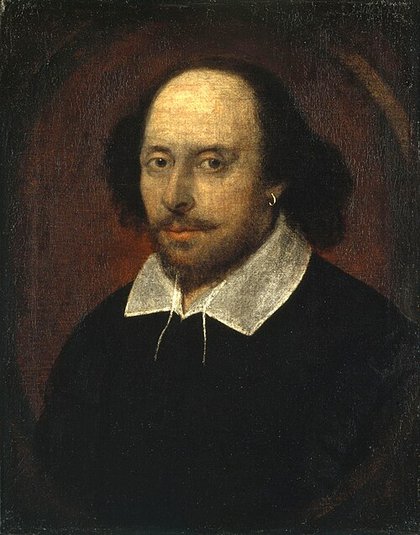
The Primary Source Record: Complete List
Seventy-plus primary source documents survive for William Shakspere of Stratford-upon-Avon. Not one of them constitutes a literary paper trail supporting the claim that he was a writer by profession. The list below is based principally on Samuel Schoenbaum's William Shakespeare: A Documentary Life (1975) and William Shakespeare: Records and Images (1981), cross-checked against Diana Price's Shakespeare's Unorthodox Biography (2012). The count of 70+ includes separate documents within single legal proceedings (conveyances, bonds, counterparts) as well as multiple parish register entries. Many of these documents are digitised and viewable at Shakespeare Documented (Folger Shakespeare Library).
Show the full document list ▼
1 · Birth and baptism
- Baptismal register, Holy Trinity Church, Stratford-upon-Avon, 26 April 1564: Gulielmus filius Johannes Shakspere
2 · Marriage
- Marriage licence bond, Episcopal Registry Worcester, 27 November 1582: William Shagspere and Anne Hathwey of Stratford
- Marriage licence allegation, 28 November 1582 (separate document authorising the marriage)
3 · Children's baptisms and Hamnet's burial
- Baptism of Susanna Shakspere, Holy Trinity, 26 May 1583
- Baptism of Hamnet and Judith Shakspere (twins), Holy Trinity, 2 February 1585
- Burial of Hamnet Shakspere, Holy Trinity, 11 August 1596
4 · Coat of arms
- Draft grant of arms to John Shakspere, College of Heralds, 1596: the application, in William's name as well as his father's, is the first record connecting the family to gentility
- Second draft of the arms grant, 1599
5 · London tax and subsidy rolls
- Subsidy roll, St Helen's Bishopsgate, 1596: assessed 5 shillings, unpaid
- Subsidy roll, St Helen's Bishopsgate, 1597: marked as moved to Surrey
- Subsidy roll, Surrey (Bankside), 1599: assessed, unpaid, referred to the Bishop of Winchester
- Subsidy roll, Surrey (Bankside), 1600: same referral
6 · London residency
- Listed as a householder, St Helen's Bishopsgate ward, 1597: the only record placing him at a specific London address
7 · Stratford property purchases
- Purchase of New Place, Stratford, from William Underhill, 4 May 1597: the second-largest house in the town
- Conveyance of New Place (counterpart), 1597
- Conveyance of cottage and garden opposite New Place, from Walter Getley, 28 September 1602
- Purchase of 107 acres of arable land, Old Stratford, from William and John Combe, 1 May 1602
- Conveyance of Old Stratford land (counterpart), 1602
- Purchase of a moiety of tithes in Stratford, Old Stratford, Bishopton, and Welcombe, from Ralph Huband, 24 July 1605
- Tithe conveyance (counterpart), 1605
8 · London property (Blackfriars)
- Purchase of the Blackfriars Gatehouse from Henry Walker, 10 March 1613: signed Willm Shakspeare
- Conveyance counterpart, Blackfriars, 10 March 1613
- Mortgage of Blackfriars Gatehouse to Henry Walker, 11 March 1613: signed William Shakspeare
- Mortgage counterpart, Blackfriars, 11 March 1613
9 · Grain and civic records
- Stratford corn and malt survey, 4 February 1598: listed as holding ten quarters of grain; no literary connection
- Listed in Stratford civic records as a new place owner paying levies, c. 1598–1610 (several separate entries)
10 · Legal actions, debt
- John Clayton v. William Shakespeare, Michaelmas term 1600: debt of £7
- William Shakespeare v. Philip Rogers, Stratford Court of Record, summer 1604: debt for malt and a loan of two shillings
- William Shakespeare v. John Addenbrooke, Stratford Court of Record, 1608–09: debt of £6; Addenbrooke left town; action continued against his surety Thomas Horneby
- Horneby action (separate writ), 1609
11 · Theatrical company documents
These documents name "William Shakespeare" in connection with theatrical activity. They record payments to the company or list company members; none specifies him as the author of any text.
- Treasurer of the Chamber accounts: payment to "William Kempe, William Shakespeare, and Richard Burbage" for two performances before the Queen, 15 March 1595: a company payment, not a writing payment
- Royal patent for the King's Men, 19 May 1603: lists "William Shakespeare" second among the company members
- Royal procession livery allowance, March 1604: lists company members including "William Shakespeare"
- Listed in the cast of Ben Jonson's Every Man in His Humour (1598), published in the 1616 Jonson Folio, an acting credit
- Listed in the cast of Ben Jonson's Sejanus His Fall (1603), published in the 1616 Jonson Folio, an acting credit
- Will of Augustine Phillips, fellow King’s Man, 4 May 1605: leaves “to my Fellowe William Shakespeare a Thirty shillings peece in gould”; a fellow actor naming him a company fellow, eleven years before his own will does the same
- Household account of Thomas Screvin, steward to Francis Manners, 6th Earl of Rutland, 31 March 1613: pays “Mr. Shakspeare” 44s for devising an impresa (emblem and motto) for the King’s Accession Day tilt, and Richard Burbage 44s “for paynting and making yt”; a paid decorative commission, not a writing payment
- Inventory of Thomas Brend, 16 May 1599: records the Globe premises as “in the occupation of William Shakespeare and others,” the earliest document tying him to the playhouse
- Globe property deeds naming “Richard Burbage and William Shakespeare gent.” among the housekeepers: Brend security conveyances (1601), Collett-to-Bodley (1608), and the indenture to Matthew Brend (1622, posthumous)
- Share litigation referencing his Globe and Blackfriars holding: Ostler v. Heminges (1615) and Witter v. Heminges & Condell (1619, posthumous)
- Cuthbert Burbage’s Answer, the “Sharers’ Papers,” c. 1635 (posthumous): recalls that the Burbages “to ourselves… joined those deserving men, Shakspere, Hemings, Condell… and others”
12 · The Mountjoy deposition
- Deposition in Bellott v. Mountjoy, Court of Requests, 11 May 1612: his longest surviving statement in his own words, about a domestic dispute over a dowry between his landlord Christopher Mountjoy and son-in-law Stephen Bellott. Signed Willm Shaksp. Contains no literary reference of any kind.
13 · Children's marriages and grandchildren
- Marriage of Susanna Shakspere to John Hall, Holy Trinity, 5 June 1607
- Baptism of Elizabeth Hall (granddaughter), Holy Trinity, 21 February 1608
- Marriage of Judith Shakspere to Thomas Quiney, Holy Trinity, 10 February 1616
14 · Deaths of parents
- Burial of John Shakspere (father), Holy Trinity, 8 September 1601
- Burial of Mary Shakspere, née Arden (mother), Holy Trinity, 9 September 1608
15 · The Welcombe enclosure
- Agreement with William Replingham about compensation for enclosure of Welcombe tithes, 28 October 1614
- Thomas Greene's diary entries about Shakspere's position on the Welcombe enclosure, 1614–15: Greene, Stratford's town clerk, records meeting him at New Place to discuss the enclosure; Shakspere expresses no strong opposition. The diary entries are private notes, not a literary record.
16 · The six signatures
- Signature on Mountjoy deposition, 1612: Willm Shaksp
- Signature on Blackfriars conveyance (copy 1), 1613: William Shakspeare
- Signature on Blackfriars conveyance (copy 2), 1613: Wm Shaks
- Signature on Blackfriars mortgage, 1613: Wm Shakspea
- Signature on will, page 1, 1616: Willm Shakspere
- Signature on will, page 2, 1616: Willm Shakspere
- Signature on will, page 3, 1616: William Shakspeare
Seven instances across four physical documents, often counted as "six signatures" by combining the two Blackfriars copies. The spelling varies across all seven.
17 · The will, probate, and burial
- First draft will, January 1616: not signed; subsequently superseded
- Revised will, 25 March 1616: three pages; itemises domestic goods, money, plate, and personal bequests. Mentions no books, no manuscripts, no literary property of any kind. The "second-best bed" bequest to his wife is the most discussed single line.
- Probate granted, Prerogative Court of Canterbury, 22 June 1616
- Burial register, Holy Trinity Church, Stratford-upon-Avon, 25 April 1616: Will. Shakspere gent
18 · Additional Stratford records
- Stratford Borough accounts listing Shakspere family in various civic capacities (John Shakspere as alderman and bailiff; several entries 1564–90 relevant to family background)
- Recusancy list, Stratford, 1592: a "Mr Shakspere" listed among those not attending church; usually attributed to his father John, occasionally to William
- Various Stratford vestry and guild records referencing New Place ownership, tithe payments, and road maintenance obligations, c. 1598–1616 (approximately 10–15 separate entries depending on how sub-items are counted)
64 numbered entries; several contain multiple discrete documents (conveyances, bonds, counterparts, parish register entries), which accounts for the difference between 64 entries and the 70+ document count.
What the Documents Show
The 70+ primary source documents for William Shakspere are not a thin or ambiguous record. They are a detailed and consistent portrait of a specific kind of man. Applied to that portrait, the evidence is unambiguous.
Seventy-plus documents is also not a small record; it is a large one by Elizabethan standards. Christopher Marlowe, dead at 29, is known from perhaps a dozen to twenty surviving documents in total: a baptism record, one signature, Cambridge buttery accounts, the Baines Note, a coroner’s report, a handful of legal entries. Thomas Kyd’s entire biographical record amounts to a few documents, most of them connected to his 1593 arrest; he is known chiefly from a single letter to the Lord Keeper. Both men left literary traces within those thinner records. Shakspere’s archive is the extensive one.
That archive has been exhaustively searched. Edmond Malone spent decades on the documentary record before his 1790 edition. J.O. Halliwell-Phillipps amassed thousands of transcripts and documents in the nineteenth century, his scrapbooks alone fill dozens of volumes at the Folger. In the twentieth, Samuel Schoenbaum’s Documentary Life (1975) became the standard collection. The Folger Shakespeare Library, with an endowment now exceeding $500 million and operating for nearly a century, has maintained dedicated archival research throughout; the Shakespeare Birthplace Trust has run research programmes for 150 years. Conservative estimates put the cumulative scholarly investment in this specific documentary record in the millions of person-hours, making it one of the most intensively searched biographical archives in literary history.
The absence of literary documents is not a gap that further searching is likely to fill. It is a finding.
| ✓ | Property acquisition | New Place (1597); 107 acres Old Stratford (1602); cottage opposite New Place (1602); moiety of tithes (1605); Blackfriars Gatehouse (1613). Five substantial property transactions over sixteen years, each documented in surviving conveyances. |
| ✓ | Debt recovery | Successfully pursued Philip Rogers (1604) for malt and a loan; pursued John Addenbrooke (1608–09) for £6, continuing the action against his surety when Addenbrooke absconded. A persistent and effective litigant. |
| ✓ | Commercial grain dealing | Listed in the Stratford corn and malt survey of February 1598 as holding ten quarters of grain, a substantial stock, at a time of local shortage and civic concern about hoarding. |
| ✓ | Theatrical investment | The 1603 royal patent and 1604 livery allowance name a William Shakespeare among the company's members, and the Globe shareholding is documented through later lawsuits among the sharers. This attests membership and a financial stake in the company, not a documented stage performance; the cast-lists that call him an actor are retrospective (Jonson's Works, 1616; First Folio, 1623). The identification of this member with the Stratford man rests on the linking documents, and is granted by this site. |
| ✓ | Restoration of family status | His father John had fallen from alderman to near-insolvency by the 1580s. William restored the family to prosperity and secured a coat of arms in 1596, establishing the Shaksperes as gentry. New Place was the second-largest house in Stratford. |
| ✓ | Civic standing | Respected Stratford gentleman, tithe holder, and property owner. The Welcombe enclosure correspondence (1614) shows him negotiating with the town clerk from a position of local standing. Buried as Will. Shakspere gent. |
Open Questions
The acting career
The documents that call him an actor are retrospective. The cast-lists for Ben Jonson's Every Man in His Humour and Sejanus (performed 1598 and 1603) first appear in Jonson's collected Works of 1616 (the year Shakspere died) and the First Folio's list of "Principall Actors" is 1623, seven years posthumous. No source from his own lifetime records him performing: no assigned role, no eyewitness account, no payment to him as a player. The genuinely contemporary theatrical documents, the 1603 royal patent and the 1604 livery, name him among the company's members, which attests membership and a financial stake, not a documented stage performance. And in any case these are acting credits, not authorship credits: no primary source of the period connects the actor to the published author "Shakespeare".
The earliest theatrical record of him points the same way. In the court accounts for the Christmas 1594 season (payment dated 15 March 1595), “William Kempe, William Shakespeare and Richard Burbage” are named as joint payees, the men who received the fee for two plays performed before the Queen, on the company’s behalf. Collecting the money is a business function, the role of a sharer or treasurer, not a record of anyone on the stage.
This bears on what “player” establishes in the first place. To be listed among “the King’s players”, as in the 1603 patent and 1604 livery, was to be a member and sharer of the licensed company, and that membership did not require a performing career. The clearest case is John Heminges, co-editor of the First Folio and one of the company’s central figures: the Dictionary of National Biography records that his “duties were largely financial,” that this “may be gathered … from the fact that he is associated with comparatively few characters,” that a 1613 jibe “casts some doubt upon his histrionic capacity,” and that he was “principal proprietor of the Globe playhouse.” A man could sit at the centre of the King’s players as treasurer and part-owner and barely act. Being counted among the company attests membership and a financial stake, which is exactly, and only, what the contemporary record shows for Shakspere.
The Stratford monument
The Holy Trinity monument is sometimes cited as contemporary evidence of Shakspere's literary status. The earliest depictions (Dugdale, 1634) show a different figure from the current monument. The monument's current form postdates his death; its evidential weight as a primary source is disputed.
The First Folio chain, the strongest primary source case for Stratford
The First Folio (1623) is the strongest primary source evidence for the conventional attribution and should be stated as such. Heminges and Condell were fellow shareholders in the King's Men who had worked alongside Shakspere for roughly two decades. Heminges in particular served as the company's business manager for more than twenty-five years; its literate, record-keeping administrator, a freeman of the Grocers' Company who also served as trustee for Shakspere's Blackfriars gate-house purchase. Testimony from colleagues of that standing, about someone they knew personally over that period, is exactly what any court treats as strong evidence. The fact that it came seven years after Shakspere's death does not weaken it: witnesses testify about the dead all the time, and we credit it.
Ben Jonson's commemorative poem "To the Memory of My Beloved, the Author Mr. William Shakespeare" is the single most important piece of testimony. Jonson knew Shakspere personally; he is listed in the cast of Jonson's own Every Man in His Humour (1598), and was alive when he wrote it. His poem supplies "Sweet Swan of Avon"; Leonard Digges, in a separate commendatory poem in the same 1623 volume, supplies "thy Stratford Moniment." Together these are the first documented textual connections between the works and Stratford-upon-Avon, written by men with direct personal knowledge of the London theatrical world during Shakspere's lifetime.
What is strange about this strong evidence:
First, there is a recognised scholarly question about who personally composed the prefatory addresses. The address "To the Great Variety of Readers," signed by Heminges and Condell, has been compared stylistically to Jonson's hand; some scholars consider Jonson the likely drafter. This is not a fringe claim; it appears in the mainstream literature, and the prose itself invites the question. But it does not weaken the Folio as evidence. Whoever held the pen, the volume remains a deliberate, public, coordinated attestation by people with direct knowledge of the London theatrical world.
Second, Jonson's recorded private remarks about Shakespeare sit uneasily alongside the Folio's commemorative register. His notebook records that Shakespeare "wanted Arte" and "never blotted out a line", observations more ambiguous in tone than his poem suggests. Whether the Folio prefaces are straightforward testimony or something more carefully constructed is a genuine interpretive question that cannot be resolved by primary source analysis alone.
Third, the Folio does not explicitly state that William Shakspere of Stratford-upon-Avon wrote the plays. It publishes under the name "William Shakespeare," and the prefatory poems connect that name to Stratford: Jonson's "Swan of Avon" and Digges's "Stratford Moniment." The identification of the Folio's author with the specific man from Stratford is an inference from those references: reasonable, widely accepted, but an inference rather than a declaration. No primary source in the Folio makes the connection explicit.
The honest assessment: The Folio is strong. The question is not whether to credit it, but what precisely it establishes, and the answer is: that in 1623, London theatre professionals who knew Shakspere published thirty-six plays under his name and connected those plays to Stratford-upon-Avon. That is the most important piece of testimony in this debate. What it does not supply is the primary source link produced during his lifetime, a manuscript, a letter, a contemporary record, that would close the gap between the attribution and the proof.