Preliminary assessment

Roger Manners

1576–1612 · 5th Earl of Rutland; visited Elsinore 1603

Proposed primarily by Belgian scholar Célestin Demblon (1912) and developed by European (largely continental) scholarship. Rutland’s visit to Elsinore in 1603 is the most cited biographical correspondence. The candidacy fails the primary source anchor criterion: no document connects Rutland to the Shakespeare literary record.

New to the Shakespeare authorship question? One-minute overview · Glossary

Candidate Selection Assessment

Criterion 1, Scholarly literature: Book-length cases exist but largely in non-English scholarship (Demblon 1912; later continental work). English-language peer-reviewed scholarly literature is thin. Borderline pass, the literature exists but is not robust.
Criterion 2, Primary source anchor: No candidate in the authorship debate has a document directly connecting them to the Shakespeare works, that silence is universal. What a qualifying case must do is directly engage with that silence and provide an account of it. The Rutland case rests on the Elsinore correspondence (a biographical coincidence, not a document) and the Rosencrantz/Guildenstern name overlap, both of which can equally be explained by any author with access to published Danish court records. The case does not yet supply an account of the evidentiary gap.
Criterion 3, No survival/conspiracy hypothesis required: Rutland died 1612. No anomalous dating required for most of the canon.
Verdict: Excluded, fails criterion 2. The Elsinore correspondence is the strongest piece of evidence for the Rutland case, and it is a correspondence, not a primary source connection to the literary record. More importantly, the existing case does not engage with the primary source silence directly; it accumulates biographical coincidences without accounting for why no document connects Rutland to the works under any name. A qualifying monograph that confronts that evidentiary gap directly, rather than routing around it, would change this assessment.
This page applies two independent evidence frameworks to this candidate using primary sources only, letters, payment records, manuscripts, and contemporary documents. Scores reflect what the historical record contains, not editorial judgment. The symbols: documented  ·  partial or contested  ·  ~ no evidence found.
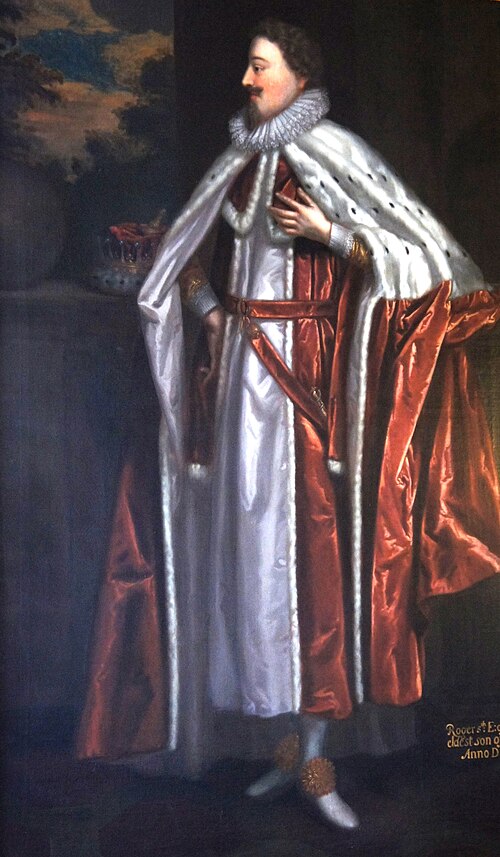
Roger Manners, 5th Earl of Rutland
Roger Manners, 5th Earl of Rutland (1576–1612).

What the Primary Sources Show

Roger Manners was the 5th Earl of Rutland, born in 1576. He was educated at Cambridge and at Gray’s Inn, and traveled on the Continent. In 1603 he traveled to Denmark as part of a diplomatic party and visited the court at Elsinore (Kronborg Castle). Among the Danish courtiers he met were men with the names Rosenkrans and Guildenstern, the same names, in slightly different spellings, as characters in Hamlet.


Rutland was born in 1576, which means he was only 17 years old when the name ‘William Shakespeare’ first appeared in print (1593). This is a chronological constraint the Rutland candidacy must address. The Elsinore visit in 1603 is ten years after the Shakespeare name first appears.


The scholarly case was initiated by Célestin Demblon, a Belgian scholar, in 1912 (Lord Rutland est Shakespeare). The case has been developed mostly in continental European scholarship; English-language peer-reviewed engagement is sparse. No primary source document connecting Rutland to the Shakespeare works, no manuscript, payment record, letter, or inscription, has been identified.

Assessment at a glance

Now assessed in the framework tables, but preliminary. Born 1576; if authorship began c.1589, Rutland would have been thirteen.

Framework Scores

Scores reflect primary source evidence only. Correspondence, inference, and parallel arguments are not counted, a check mark requires a document.

Price Literary Paper Trail
~ ~ ~ ~ ~ ~ ~ ~
paper trail score: ✓ in categories 1 and 6 only. No engagement with the literary record in primary sources.
See full Price table
Convergence Analysis
~~~~~~~~~~~
Now scored in the main Convergence Analysis alongside the other candidates.
See full convergence table

Open Questions

What new primary source evidence would most change this assessment. New evidence is welcome, but it must be a primary source document, not an inference from the works or a chain of reasoning from known facts. See A Proposal for Advocates.
What this candidate requires: The candidacy requires a documented Elsinore visit (1603) and student-period connections to serve as the biographical basis for authorship, without any primary source document connecting Rutland to the plays, the players, or the publication record. A chronological constraint compounds the problem: Rutland died in May 1612, placing the late canon at or beyond his death with no explanation for who completed or transmitted those works.

A primary source document

Rutland is excluded on criterion 2. A primary source document connecting him to the Shakespeare literary record, a payment, a letter, a manuscript, an inscription in a book owned by Rutland, would change that assessment immediately. The Elsinore correspondence, however striking, cannot substitute for this.

The 1593 constraint

Unlike the post-1604 questions raised for candidates who died before the canon closed, Rutland’s is a front-end constraint, and it rests on documented facts rather than dating inference: the name “Shakespeare” first appeared in print in 1593, on Venus and Adonis, dedicated to the Earl of Southampton, and Rutland, born in 1576, was seventeen. Meres names a body of plays by 1598, when he was twenty-two. The candidacy owes an account of a teenager producing the Southampton poems and the early canon. This is a genuine constraint the candidacy must address; it is not, by itself, a refutation.