Thomas Nashe & Thomas Kyd
Professional Elizabethan writers; occasionally proposed as collaborators
Nashe (1567–c.1601) and Kyd (1558–1594) are professional Elizabethan writers with documented literary careers. They are occasionally proposed as contributors to or early authors of specific Shakespeare plays, particularly the Henry VI sequence. Neither is proposed as the sole author of the Shakespeare canon. This is a collaboration question, not an authorship candidacy, and it is out of scope for this site’s candidate framework.
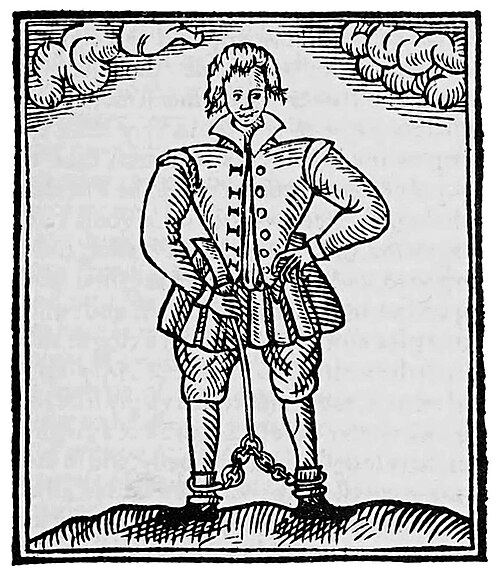
Collaborative candidates without a qualifying publication establishing either as primary author of the full canon.
What the Primary Sources Show
Thomas Nashe (1567–c.1601)
Nashe was a professional writer, pamphleteer, prose satirist, and playwright. His documented literary output is substantial: Pierce Penniless (1592), Strange News (1592), The Unfortunate Traveller (1594), and the play Summer’s Last Will and Testament (1592). His authorship of these works is documented in primary sources. He is proposed as a co-author of 1 Henry VI, a claim advanced in mainstream Shakespeare scholarship (notably by Gary Taylor) as part of the wider collaborative authorship project, not as an alternative authorship claim.
Nashe’s paper trail profile is strong: he has a documented literary paper trail, his own hand is known, and he received payment for literary work. These are exactly the characteristics absent for Shakspere of Stratford. They are relevant to the authorship question insofar as they illustrate what a professional Elizabethan writer’s documentary record looks like.
Thomas Kyd (1558–1594)
Kyd was the author of The Spanish Tragedy (c.1587), the most influential English revenge tragedy before Hamlet. His authorship of The Spanish Tragedy is documented. He is proposed as the author of a lost Ur-Hamlet, a pre-Shakespearean Hamlet play referred to in a 1589 document (Thomas Nashe’s preface to Menaphon). This is a mainstream scholarly hypothesis about theatrical prehistory, not an alternative authorship claim.
Kyd was arrested in 1593 on suspicion of atheism (heretical papers found in his lodgings were initially attributed to him but later claimed to belong to Christopher Marlowe). He died in poverty in 1594. His case is relevant to the chronology of the Shakespeare canon, The Spanish Tragedy‘s relationship to Hamlet is a genuine scholarly question, but this is a source question, not an authorship candidacy.
Why These Writers Are Out of Scope
What These Cases Do Show
Professional writers leave traces
Nashe and Kyd both have documented literary paper trails, payment records, manuscripts, contemporaries who identified them as authors of specific works. This is exactly the kind of evidence that is absent for Shakspere of Stratford. Their cases are useful as control examples: this is what a professional Elizabethan writer’s primary source record looks like.
The Ur-Hamlet and the early histories
The Kyd Ur-Hamlet hypothesis and the Nashe contribution to 1 Henry VI are both part of mainstream scholarly discussion about the early Shakespeare canon. They are relevant to the collaboration page and to chronological questions, but they do not constitute alternative authorship candidacies.
Note on Thomas North
Thomas North is in a different category from Nashe and Kyd. North is proposed as the author of proto-plays that Shakespeare revised, which is a closer approach to a sole authorship claim, though still not fully formed as one. See north.html for the North assessment, which uses a different analytical framework.